A retention pond is working infrastructure
A retention pond is more than a landscaped water feature. It holds a permanent pool between storms and helps control stormwater runoff, reduce downstream flooding and erosion, and—in properly designed systems—support water-quality treatment. The U.S. Environmental Protection Agency explains that retention and detention basins collect runoff and release it at controlled rates.
That function depends on routine access. Property teams need to see and reach embankments, inlets, outlets, spillways, drainage channels, and erosion-prone areas. When grass, vines, brush, or saplings obscure those components, inspection becomes harder and developing problems are easier to miss.
Why pond slopes are difficult to mow
Retention pond terrain combines several hazards that ordinary lawn equipment does not handle well:
- Steep side slopes and embankments can exceed the comfortable operating range of conventional riding mowers.
- Soft or saturated soils reduce traction and may conceal ruts, washouts, or unstable edges.
- Water and drop-offs increase the consequences of a slide or rollover.
- Riprap, pipes, trash racks, stumps, and debris create obstacles that may be hidden by tall vegetation.
- Changing conditions after a storm can make a previously manageable route unsafe.
OSHA’s riding-mower rollover guidance specifically identifies slopes, wet surfaces, embankments, ditches, and areas near ponds as rollover hazards. OSHA advises evaluating terrain, following manufacturer slope limits, and establishing safety zones near water and unprotected edges.
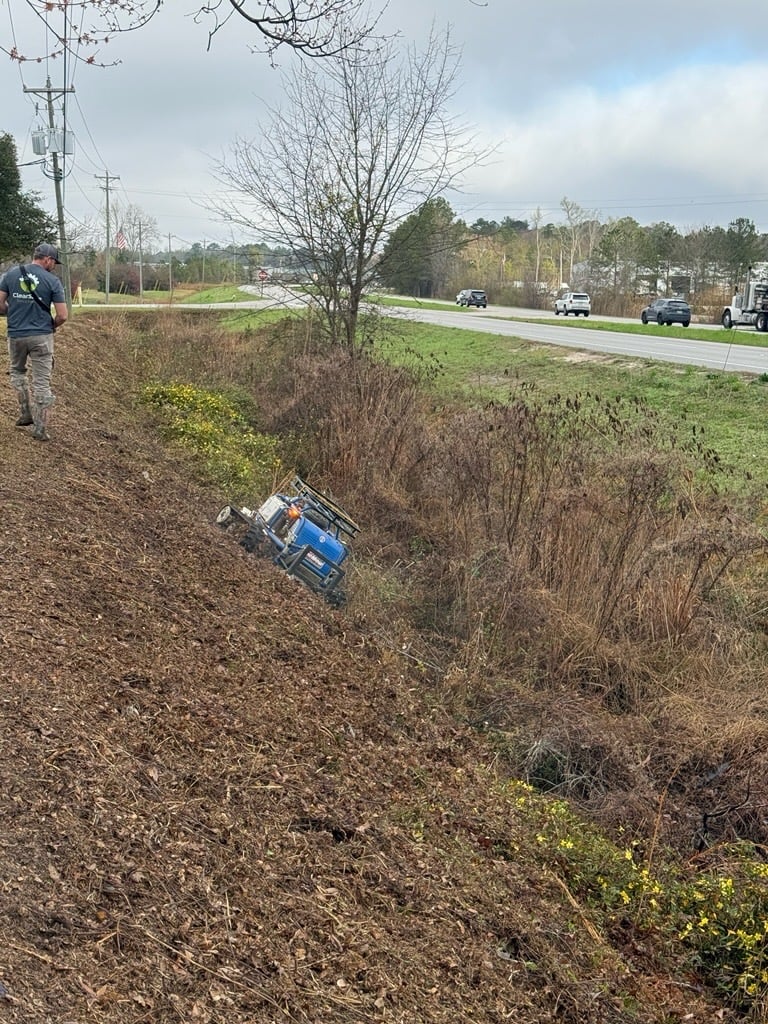
How a remote-controlled mower changes the job
1. The operator can work from a safer position
The most important difference is simple: the operator does not ride on the machine. From a selected vantage point, the operator controls travel and cutting while remaining outside the mower’s immediate rollover zone. That does not remove every hazard, but it avoids putting a person directly on the steepest or softest part of the slope.
2. Tracked traction suits irregular grades
A purpose-built tracked mower distributes its weight differently than a wheeled riding mower and maintains contact across uneven ground. This is useful on pond embankments, drainage swales, berms, and transitions where turf may be rough, wet, or rutted. Every site still requires a pre-work assessment, and equipment must remain within the manufacturer’s operating limits.
3. Compact access reduces unnecessary disturbance
Retention ponds often sit behind buildings, fences, parking lots, or narrow maintenance easements. A compact remote mower can reach areas that may be awkward for a tractor and can work without placing a large ride-on unit close to the waterline or an unprotected edge.
4. Cutting restores visibility
Controlled mowing exposes the condition of the ground and critical infrastructure. Crews can more easily identify erosion channels, bare soil, sediment buildup, blocked inlets, animal burrows, damaged matting, woody growth, or areas that remain saturated.
Where remote mowing is most useful
Remote-controlled mowing is especially well suited to:
- Grassed pond embankments and side slopes
- Detention-basin bottoms after soil conditions are confirmed
- Drainage ditches, swales, berms, and access easements
- Vegetation around—but not on—visible outlet structures and spillways
- Overgrown areas where brush is hiding the terrain
- Commercial, industrial, municipal, HOA, and multifamily stormwater facilities
ClearSlope’s TracMow system is designed for slopes up to 45 degrees when access, soil, vegetation, weather, and other site conditions allow. The slope number is never the only decision point; a safe plan also considers footing, edges, water, obstacles, visibility, and the manufacturer’s requirements.
What remote mowing does not replace
Mowing is vegetation management—not a structural inspection or repair. A qualified stormwater professional may still be needed for dam concerns, seepage, sinkholes, serious erosion, failed outlet structures, sediment removal, permitting, or engineering questions. Likewise, desirable shoreline and wetland vegetation should not be removed simply to create a manicured appearance.
The EPA’s green-infrastructure maintenance guidance emphasizes periodic inspection, removal of inappropriate vegetation and debris, and repair of erosion, clogs, or structural damage. The right mowing scope should support those goals rather than disturb intentionally planted buffers or aquatic benches.
A practical maintenance sequence
- Review the pond’s maintenance plan and identify areas intended for mowing.
- Walk the accessible perimeter and locate water edges, drop-offs, structures, debris, soft soils, and hazards.
- Choose an operating position that preserves visibility and keeps the operator out of the machine’s path.
- Cut in controlled passes while monitoring traction, discharge, people, vehicles, and changing conditions.
- Inspect the exposed terrain for erosion, sediment, woody growth, damage, or blocked infrastructure.
- Document concerns and route structural or regulatory issues to the appropriate professional.
Retention Pond Mowing FAQ
Practical answers for property managers planning vegetation maintenance around retention ponds, embankments, and difficult drainage terrain.
What is a retention pond, and why does it need mowing?
A retention pond is permanent stormwater infrastructure that holds a pool of water and helps manage runoff. Selective mowing keeps embankments, inlets, outlets, spillways, and erosion-prone areas visible and accessible for routine inspection. The goal is maintenance visibility—not removing intentional shoreline or aquatic vegetation.
Why is a remote-controlled mower safer on pond slopes?
The operator does not ride on the mower and can work from a selected vantage point away from the machine’s immediate rollover zone. That reduces direct rollover exposure, but it does not remove every hazard. ClearSlope still evaluates the terrain, water edge, access, visibility, weather, obstacles, and the equipment manufacturer’s operating limits before work begins.
How steep a slope can ClearSlope mow?
ClearSlope’s TracMow system is designed for slopes up to 45 degrees when access, soil, vegetation, weather, obstacles, and manufacturer requirements allow. A slope rating is only one factor, so every property is reviewed individually before a mowing plan is recommended.
Can the remote-controlled mower work on wet or soft ground?
Tracked equipment can provide useful traction and distribute its weight across irregular terrain, but saturated, unstable, eroded, or submerged areas may still be unsuitable. Recent rainfall and changing soil conditions can require postponing work or using an alternative approach.
Will mowing damage the pond or desirable vegetation?
The mowing scope should preserve intentional buffers, aquatic vegetation, and protected areas while avoiding outlet structures, spillways, pipes, and other infrastructure. Remote mowing supports routine vegetation management; it does not replace ecological guidance, engineering review, or structural repairs.
How often should retention pond slopes be mowed?
Frequency depends on vegetation growth, season, inspection requirements, the site’s maintenance plan, and local conditions. A practical schedule keeps critical structures and ground conditions visible without overcutting areas intended to remain as buffers or habitat.
What should a property manager provide before scheduling?
Share current photos, access details, known slope or drainage plans, recent storm conditions, and the location of structures, utilities, gates, restricted vegetation, and other hazards. Those details help ClearSlope determine whether remote mowing is appropriate and prepare a site-specific estimate.