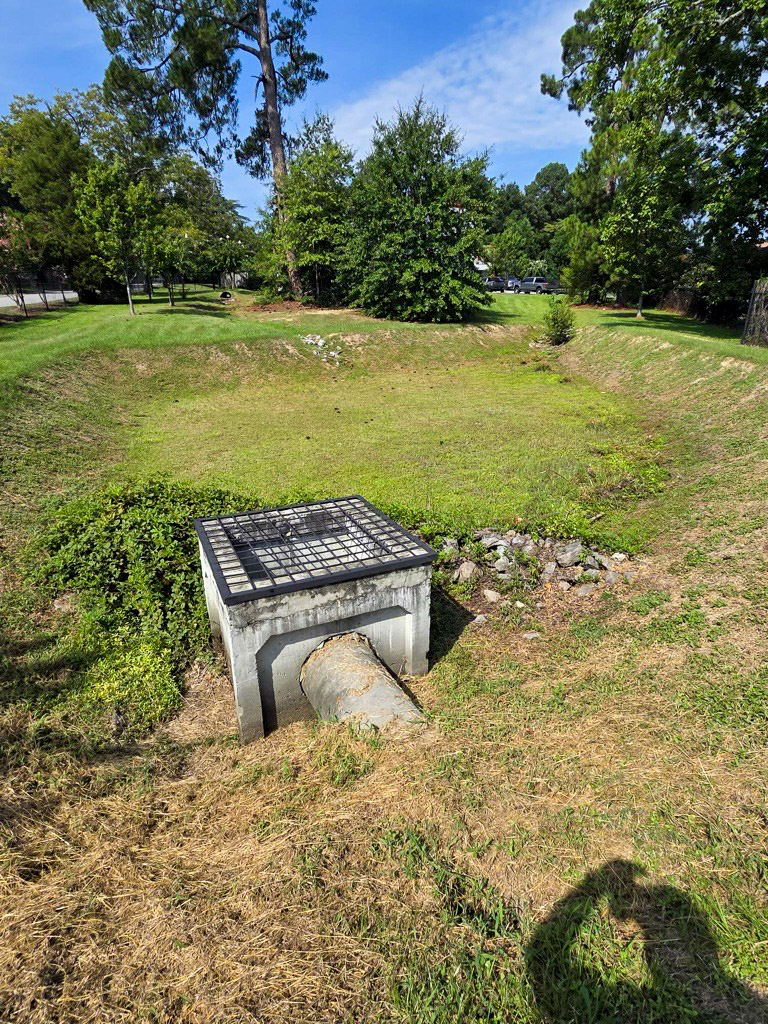
A pond trash rack or debris screen needs a replacement assessment when it is missing, displaced, visibly deteriorated, no longer securely supported, or repeatedly creating problems that cleaning alone does not resolve. The correct decision depends on the whole outlet assembly—not just whether the metal looks rusty.
For an HOA, commercial property or industrial site in North Carolina or South Carolina, the useful question is: Can this component still perform its intended job, and can it be maintained as specified? This guide helps an owner organize that conversation. It is not a structural inspection or a replacement design.
What conditions deserve a closer look?
The EPA’s pond-management guide identifies loose rack pieces, corrosion, damaged protective coatings and loose or corroded fasteners as mechanical-component concerns. It also separates specialized structural work from routine grounds maintenance. These are reasons to request assessment, not an invitation to test the rack by standing on it. EPA: Stormwater Wet Pond and Wetland Management Guidebook.
- A missing or shifted panel: photograph the location from stable ground and notify the responsible property manager.
- Broken or visibly weakened parts: ask whether the problem is isolated or affects the complete assembly.
- A frame that no longer appears properly seated: the supporting structure and attachment points need attention too.
- Repeated unsuccessful repairs: collect prior invoices and photos so the next assessment considers the history.
- A component that cannot be serviced as intended: ask how the proposed work will preserve maintenance access.
Do not poke, climb, pry or lift a questionable cover to find out how strong it is. “It held last time” is not evidence of its present condition.
Cleaning, repair or replacement: separate the decisions
A debris-covered rack is not automatically worn out. Conversely, a clean-looking rack is not automatically sound. Ask the person assessing the site to explain which of three problems is present: material covering an otherwise serviceable component; a repairable component defect; or an assembly that needs replacement or a more detailed design review.
Keep the proposed outcome specific. “Restore access to the screen” is different from “replace the screen.” Neither necessarily means “repair the concrete outlet,” “clear the downstream pipe” or “certify pond performance.” Those items should be named separately if they are needed.
This distinction also improves quote comparisons. A low number for a metal panel alone should not be compared directly with a proposal that includes site preparation, removal, installation and documented follow-up.
Why a replacement must match the outlet’s purpose
A rack is part of a drainage system. NC DEQ’s design guidance calls for considering the expected debris problem and the outlet arrangement when selecting debris protection. Changing the screen pattern, shape or placement without reviewing the system is not a reliable improvement. NC DEQ: Common SCM Structures and Materials.
Ask the contractor what approved drawing or specification the replacement will follow. If the existing assembly differs from that drawing, document the difference and ask the appropriate design professional or stormwater authority how it should be resolved. Do not assume the old installation is correct merely because it has been there for years.
A new screen is not a guarantee against flooding. If the complaint is unusually high water, explain that symptom separately from the rack’s visible condition. A component replacement should not substitute for investigating the actual drainage problem.
Bring the right information to a site review
A useful replacement request includes the address and structure location, the property contact, photographs, the latest inspection findings, and any record of earlier work. Add the original outlet detail or as-built drawing when available. If several ponds are on the property, identify the exact basin and outlet rather than referring to “the drain behind the building.”
Local maintenance responsibilities matter. Lexington County’s published pond-maintenance agreement, for example, addresses owner records and upkeep of inlet and outlet protection. Read the agreement and permit that actually apply to your property; one county’s form is not a universal rule for both Carolinas. Lexington County: Pond Maintenance Agreement.
Also list gate access, nearby parking or deliveries, fencing and any work restrictions. Tell the contractor which person can authorize additional work if the visit reveals a separate problem.
What should be documented after installation?
Request a clear record of what was installed, the location, the installation date, relevant product or drawing information, photographs and the agreed maintenance instructions. Record any unresolved items instead of letting them disappear into a general “job complete” email.
Installation is not automatically a certified stormwater inspection. Raleigh’s formal reporting program illustrates that distinction: it specifies inspection documentation and professional qualifications, with exceptions for certain smaller sites. Other jurisdictions have their own processes. City of Raleigh: Stormwater Device Inspection Reports.
Assign the next review and maintenance contact before closing the work order. A replacement should begin a documented maintenance cycle, not end attention to the outlet.
When should you stop and escalate?
Keep people away from open or unstable structures. If water threatens people, access routes or occupied buildings, use the appropriate emergency channel rather than waiting for a routine estimate. Never approach an outlet through floodwater; the National Weather Service warns that water conditions can change quickly and conceal hazards. National Weather Service: Flood Preparedness.
Discuss a trash-rack or debris-screen project
ClearSlope offers trash-rack and debris-screen installation services, with site assessment and coordination of vegetation access. Request a free estimate and include the outlet’s condition, available plans and site photos. Engineering, permit requirements and formal inspection needs must be confirmed for the particular project.
For wider pond-care context, read our property manager’s guide to trash racks and debris screens or browse the Knowledge Center.
Pond Trash Rack Replacement FAQ
Does surface rust mean a pond trash rack must be replaced?
Not necessarily. Surface discoloration and loss of metal are different conditions. A qualified assessment should examine the rack, connections and supporting structure before deciding whether coating maintenance, repair or replacement is appropriate.
Can a damaged screen simply be removed?
Do not remove an existing rack or screen as a permanent shortcut. First establish what it protects and what the approved drainage plan requires. The owner should arrange appropriate assessment and keep people away from a displaced or open structure.
Will a new trash rack stop all pond flooding?
No. A replacement addresses a particular component. Flooding can involve rainfall beyond the system’s capacity, other obstructions, sediment, damaged drainage structures or downstream conditions. A screen can also clog if debris accumulates.
Can we order a replacement from a photograph?
Photos can support an initial conversation, but they do not establish dimensions, attachment condition or hydraulic suitability. Share available plans and arrange a site review before a replacement is specified or ordered.
Does a screen replacement count as a certified pond inspection?
No. Installation or maintenance documentation is not automatically the inspection report required by a permit or local program. Confirm separately who must inspect, sign and submit any required documentation.
What should we send ClearSlope for a replacement inquiry?
Send the property address, a safe-distance overview, closer photos taken only from stable ground, the reason for concern, available outlet drawings and access information. ClearSlope can discuss trash-rack and debris-screen installation needs and related vegetation access.
Sources and further reading
- EPA: Stormwater Wet Pond and Wetland Management Guidebook
- NC DEQ: Common SCM Structures and Materials
- Lexington County: Pond Maintenance Agreement
- City of Raleigh: Submit a Stormwater Device Inspection Report
- National Weather Service: Flood Preparedness
Research reviewed September 8, 2026. General owner guidance; the approved plan, site conditions and applicable local requirements govern each project.
This guide provides general property-planning information. Site conditions, approved plans, manufacturer instructions, and applicable local requirements determine the appropriate scope. It is not a substitute for project-specific engineering or required inspections.