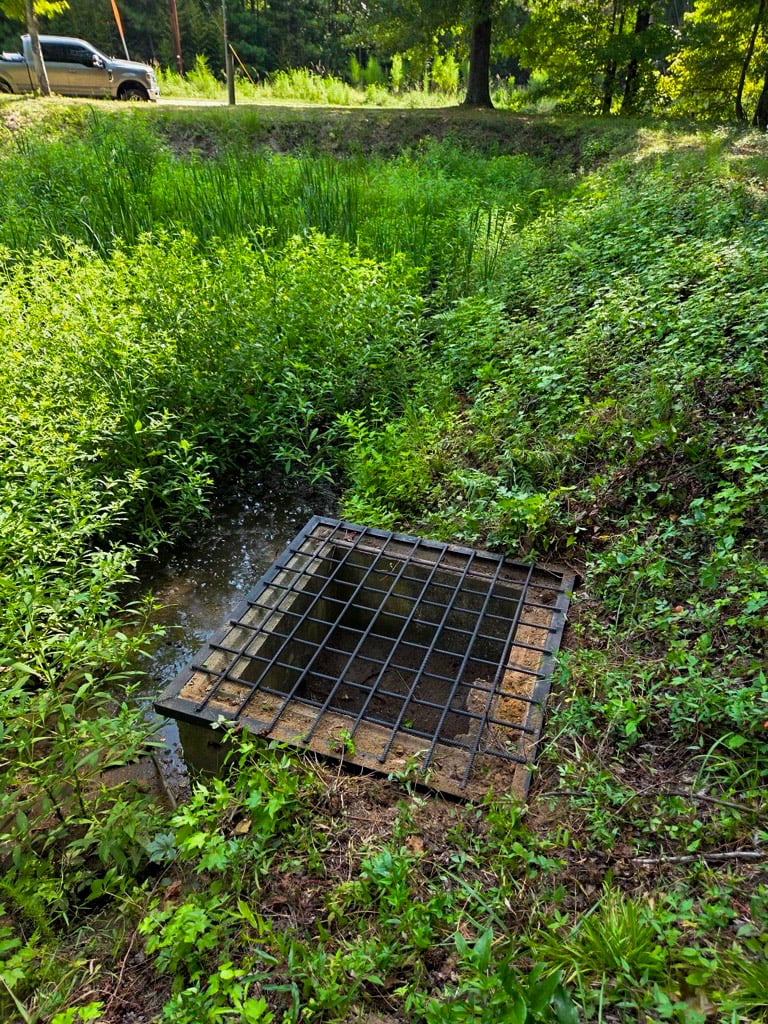
After heavy rain, a pond outlet screen should be observed from safe, stable ground for new debris accumulation, displacement and unusual surrounding water conditions. Document what changed and send it to the responsible maintenance contact. Do not approach the outlet through floodwater or attempt to unblock it while water is moving through it.
For property managers, a post-storm check is most useful when it leads to a clear work order or escalation. It is not a substitute for the site’s scheduled inspection program. Clemson Extension recommends attention after storm events and keeping inlets and outlets clear. Clemson: Stormwater Pond Owners & Managers.
First decide whether it is safe to observe
Postpone a routine visit when weather warnings remain active, access is flooded, ground is unstable or water is rising. The National Weather Service warns that floodwater depth and flow can change rapidly. Follow public-safety directions and never walk or drive through flooded access routes. National Weather Service: During a Flood.
A receding waterline does not automatically make the site safe. CDC notes that floodwater can conceal debris and other physical hazards and may contain contamination. Stay outside the structure and out of the water; this checklist does not authorize entry, lifting covers or handling submerged material. CDC: Floodwater Safety.
A focused outlet-screen observation checklist
Use the same viewing locations after each storm where safe. Label photos with the pond or structure identifier so they can be compared with earlier conditions. From those locations, record:
- Screen coverage: are leaves, sticks, litter or cut vegetation visibly gathered against the rack?
- Position: does the panel appear seated as before, or is there an obvious shift, gap or missing section?
- Visible damage: is anything newly bent, broken or detached?
- Water context: how does the waterline compare with the site’s documented normal condition and recent photographs?
- Surrounding change: is there new erosion, displaced material or water appearing somewhere unexpected?
- Access: can the designated contractor reach the area without crossing flooded or visibly unstable ground?
Record what you can actually see. “Leaves cover the near side of the rack” is stronger documentation than “the pipe is completely blocked” when the pipe interior has not been assessed. Likewise, “water is higher than last week” is an observation, not a diagnosis.
Read the water level in context
A wet pond normally retains water between storms; a dry detention basin has a different intended operating pattern. NC DEQ explains the distinction between a wet pond’s permanent pool and additional temporary storage. Use the approved plans and maintenance instructions to understand the expected behavior of your facility. NC DEQ: SCM Operation & Maintenance.
If water remains unusually high, do not assume the screen is the only cause. Clemson identifies outlet obstruction and outlet-related problems among the issues that can affect pond levels. Persistent abnormal conditions need a broader review. Clemson: Excessive Low or High Water.
Do not remove a control plate, alter an opening, operate an unfamiliar valve or pump down the pond to “help it drain.” Tell the maintenance contact when the rain occurred, what changed, and whether the same symptom has happened before.
Turn observations into the right next step
No visible change: file the photos and continue the site’s normal schedule. A clean-looking screen does not prove that concealed components are clear.
New accumulation or visible damage: notify the assigned maintenance contact and request an assessment or work order. Include the location, photos and access limitations; let the qualified contractor establish the method and timing of work.
Immediate threat: if rising water threatens people, roads or occupied buildings, use the appropriate emergency reporting channel. Do not wait for an online estimate response or enter the basin to attempt a rescue of the drainage system.
Confirm ownership before authorizing work. Raleigh’s published guidance distinguishes private-property drainage from city and state-road responsibilities. That is a useful reminder to identify the responsible party locally; it is not a maintenance map for every Carolina property. City of Raleigh: Stormwater Maintenance and Inspections.
Address recurring accumulation between storms
Compare repeat photographs to identify questions worth investigating: Is the same type of yard debris arriving each time? Did nearby clearing or landscaping change? Is material being piled near the drainage route? Share those patterns instead of repeatedly requesting an identical cleanup with no context.
Ask grounds crews to keep leaves, clippings and loose landscaping material out of drains and away from places where runoff can readily carry them in. Preserve the vegetation required by the site plan; a tidy outlet does not require indiscriminate clearing of the entire shoreline.
Close each work order with the action taken, completion date, photographs and unresolved concerns. Set the next observation or inspection according to the site-specific plan rather than adopting a generic calendar from an article.
When the screen itself needs attention
If the post-storm review identifies a missing or damaged screen, explore ClearSlope’s trash-rack and debris-screen services and request a free estimate. Include your observation record and access details so installation needs can be discussed alongside vegetation coordination.
For the wider maintenance program, see our detention pond maintenance checklist and Knowledge Center.
Post-Storm Outlet Screen FAQ
Should I check the outlet screen while it is raining?
Do not enter a stormwater basin or approach an outlet during hazardous weather, rising water or unsafe ground conditions. Follow weather alerts and wait until a safe observation can be made. An urgent threat belongs with emergency responders, not a routine maintenance visit.
How soon should pond water return to its normal level?
Use the approved design and operation-and-maintenance plan for that pond. Wet ponds and dry detention basins behave differently, and storm conditions matter. A generic drainage-time rule is not enough to determine whether your outlet is working correctly.
Does debris on a screen mean the pond is failing?
Not by itself. A screen is intended to intercept debris, so some accumulation can indicate material has reached it. The important questions are whether accumulation interferes with its intended function, whether the assembly is sound and whether maintenance is being completed.
Can I push leaves through the screen to clear it?
No. Pushing debris into an outlet moves the problem into the drainage system. Arrange appropriate removal and disposal under the site maintenance plan, without entering the structure or working in moving water.
Who should receive the post-storm photos?
Send them to the property’s designated stormwater maintenance contact or manager. Include the exact outlet location, time, observed conditions and any immediate concern. Report public-road drainage issues to the responsible agency rather than authorizing work yourself.
Can ClearSlope help if the screen is damaged?
ClearSlope can discuss trash-rack and debris-screen installation and coordinate vegetation access for a site review. A damaged outlet, persistent water-level problem or required certified inspection may also need an appropriately qualified specialist.
Sources and further reading
- Clemson Extension: Stormwater Pond Owners & Managers
- NC DEQ: SCM Operation & Maintenance
- Clemson Extension: Excessive Low or High Water
- National Weather Service: During a Flood
- CDC: Floodwater Safety
- City of Raleigh: Stormwater Maintenance and Inspections
Research reviewed September 8, 2026. General observation guidance, not an emergency-response procedure, engineering assessment or certified inspection.
This guide provides general property-planning information. Site conditions, approved plans, manufacturer instructions, and applicable local requirements determine the appropriate scope. It is not a substitute for project-specific engineering or required inspections.