Forestry mulching is generally considered for suitable woody brush and understory that need to be reduced into smaller material. Bush hogging is generally considered for tall grass, weeds and manageable brush that need to be cut back. Neither is automatically the better choice: vegetation, access, soil conditions and the finish you want should drive the decision.
For a homeowner reclaiming an edge of the yard or a property manager reopening an overgrown area in the Carolinas, those service names can sound interchangeable. They are not. A useful estimate begins with the intended result, not just a request to “clear the lot.”
What does forestry mulching do?
Forestry mulching is commonly associated with mastication: mechanically grinding, chopping or shredding vegetation into smaller pieces. The U.S. Forest Service’s mastication guide explains that different cutting heads and carriers are used for different objectives. The treatment changes the form of the vegetation; it is not necessarily the same operation as removing material from the property.
Ask what the proposed work will leave behind. A mulched woodland edge, a walkable access corridor and a future lawn require different finishes. The amount and size of residue, remaining stems and treatment around retained trees should be understood before work starts.
What is bush hogging?
Bush hogging usually means rough cutting with a rotary brush cutter. It is not the same as a close-finished lawn cut. NC State Extension’s woodland-management guide describes brush hogs as tools for managing unwanted competition and maintaining trails and access routes.
Depending on the actual equipment, a brush-cutting attachment may be carried by a tractor or another compatible machine. The service name alone does not tell you the cutting capacity or terrain suitability. Some properties simply need tall growth knocked back; others contain woody material that calls for another attachment or method.
Compare the problem you are trying to solve
- Mostly tall grass and weeds: discuss bush hogging or another appropriate mowing method first.
- Dense woody understory: discuss whether forestry mulching fits the vegetation and desired residue.
- Mixed conditions: separate the open portions, brush pockets and sensitive edges into work zones.
- A future driveway, building or lawn: explain the next use; cutting vegetation alone does not establish a finished base or planting surface.
- Invasive growth: identify the plants and include follow-up control in the discussion, rather than assuming one treatment ends the problem.
These are starting points for an assessment, not operating instructions. A wide-open field and a wooded strip beside parked vehicles may need different work controls even when their acreage is identical.
What affects the equipment choice?
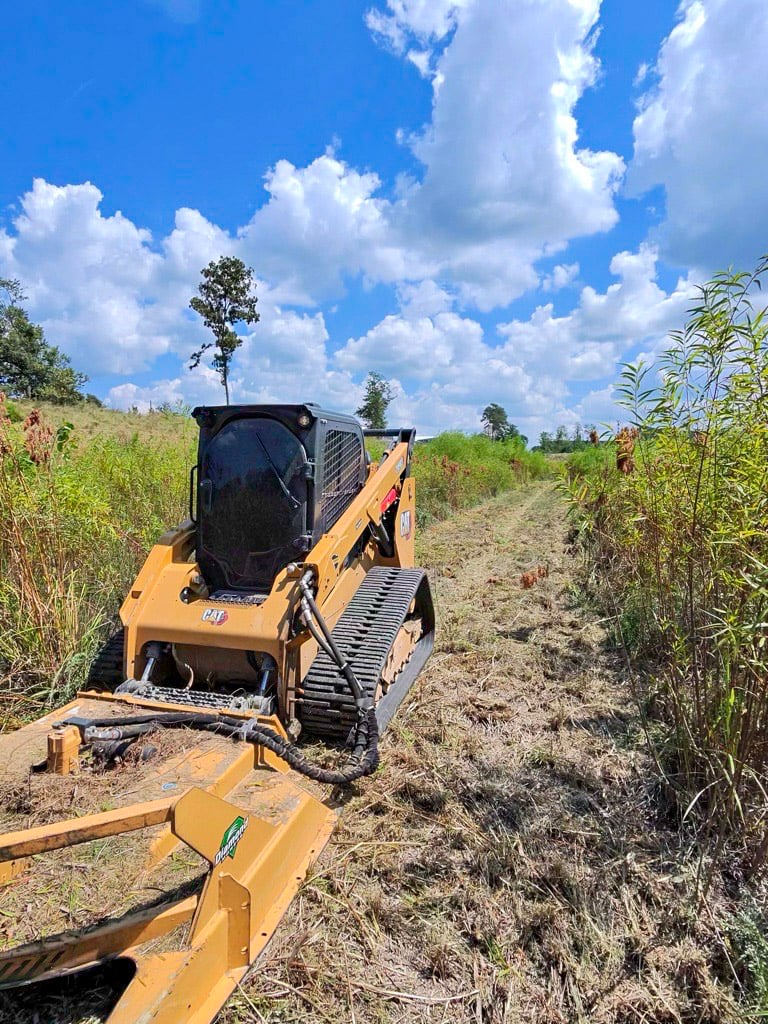
A contractor should evaluate both the machine and its working environment. The NC State Extension site-preparation guide emphasizes vegetation type and density, soil conditions and the landowner’s objectives when choosing a treatment. It also cautions against heavy-equipment work when soils are too wet.
Practical questions include whether the carrier can reach the area, turn without damaging retained features and work within its operating limits. Gates, buried debris, overhead branches, abrupt grade changes and nearby people can change the plan. Do not transfer the capabilities of ClearSlope’s remote-controlled slope mower to a skid steer, excavator or forestry-mulching setup.
How do you compare estimates fairly?
Ask each provider to describe the same end condition. “One pass over two acres” and “reduce designated woody growth, retain marked trees and finish an access lane” are different promises. Clarify the following before comparing totals:
- Which areas and vegetation are included, and what is excluded?
- What material will remain, and is debris removal included?
- How will retained trees, fences and drainage features be protected?
- Are stump grinding, grading or soil preparation separate?
- What conditions could pause work or require a scope change?
- What follow-up should the owner plan after the initial service?
Do not choose based solely on a machine photograph or a claimed daily acreage rate. Dense growth, hidden material and a detailed finish can change the time required substantially. For a related equipment comparison, see flail mowing versus brush hogging.
Safety and ground protection belong in both scopes
Rotary cutting can throw hidden objects. The Bush Hog RZ 60 operator’s manual calls for inspecting the work area, removing potential thrown objects and keeping people clear. It is an example of manufacturer safety guidance, not a statement that ClearSlope uses that model. The instructions for the actual carrier and attachment must govern the job.
Likewise, a mulch layer is not a promise of zero soil disturbance. Work near water, unstable edges or protected vegetation may require exclusions and additional review. An equipment operator should not be expected to certify drainage, wetland boundaries or structural conditions as part of a basic cutting estimate.
Choose a result you can maintain
Think beyond the first cleared view. Will the area become a regularly cut field, a selectively managed woodland or a future improvement project? That answer helps determine how much initial processing is useful and which follow-up tasks belong in the budget.
Explore ClearSlope’s forestry mulching and bush hogging services, then request a free estimate with photos and a description of the result you want.
Forestry Mulching vs. Bush Hogging FAQ
Is forestry mulching the same as bush hogging?
No. Forestry mulching processes suitable woody vegetation into smaller residue. Bush hogging usually refers to rotary brush cutting for tall grass, weeds and suitable light brush. The actual vegetation, attachment and desired finish determine which method fits.
Will forestry mulching remove roots and stumps?
Do not assume so. Cutting or grinding above-ground growth does not mean roots have been removed or every stump has been ground below grade. Stump work, excavation and a construction-ready finish need separate, explicit scope decisions.
Which method costs less?
There is no reliable comparison without a site-specific scope. Density, stem sizes, obstacles, access, acceptable residue and follow-up work affect the effort. A lower price for one pass may not cover the finish another quote includes.
Can bush hogging clear small trees?
Some rotary cutters can handle specified woody growth, but capacities differ by model and operating conditions. The contractor must assess the actual stems and follow the matched carrier and attachment limits. A generic tree-diameter promise is not a sound selection rule.
Can either method be used on steep or wet land?
Only if the complete equipment setup, terrain, soil and surrounding hazards permit the work. Tracks do not establish a safe slope rating or make saturated soil suitable. Some areas require a different method, postponement or exclusion.
Can ClearSlope help choose between the two services?
Yes. Send photos, the property location, approximate work area, access details and your desired result. ClearSlope can review forestry mulching and bush hogging options and identify which portions need further site assessment or a separate scope.
Authoritative resources
U.S. Forest Service: Is Mastication Right for Your Site? NC State Extension: Woodscaping Your Woodlands NC State Extension: Site Preparation Methods and Contracts Bush Hog: RZ 60 Rotary Cutter Operator’s ManualExplore more property-care guidance in the ClearSlope Knowledge Center.
This guide provides general property-planning information. Site conditions, approved plans, manufacturer instructions, and applicable local requirements determine the appropriate scope. It is not a substitute for project-specific engineering or required inspections.